
La mayoría de la gente asocia “negligenciaCon demandas civiles, reclamaciones de seguros y disputas por lesiones personales. En muchas situaciones, ahí es precisamente donde entra en juego la negligencia, ya que el derecho civil está diseñado para resolver conflictos privados y compensar pérdidas. La negligencia criminal es diferente. Es la etiqueta que se usa cuando una conducta es tan peligrosamente imprudente y se aleja tanto de las normas de seguridad aceptadas que el gobierno la trata como un delito y no solo como una falta civil.
En Florida, lo que se conoce como "negligencia criminal" se suele analizar mediante el concepto de "negligencia culpable". Las instrucciones estándar para el jurado en casos penales en Florida describen la negligencia culpable como algo que va mucho más allá de la simple negligencia, utilizando un lenguaje que apunta a una conducta grave y flagrante, una conducta temeraria y un desprecio absoluto por la vida humana o la seguridad de los demás.
Si está siendo investigado, interrogado por las autoridades o acusado por presunta negligencia criminal, su riesgo no se limita a una disputa con la aseguradora o a una indemnización. La exposición a problemas legales puede implicar encarcelamiento, libertad condicional, supervisión judicial, multas y consecuencias legales duraderas que afectan su trabajo, licencias, antecedentes penales y su historial delictivo. Si se encuentra en la otra parte, es decir, si cree que la extrema negligencia de alguien con respecto a la seguridad causó lesiones graves o la muerte, es importante comprender que el sistema penal no está diseñado principalmente para indemnizar a las víctimas de la misma manera que los tribunales civiles.
Este artículo explica qué significa generalmente la negligencia criminal en Florida, los elementos que los fiscales suelen probar, en qué se diferencia de la negligencia civil, ejemplos reales relacionados con la ley de Florida, las sanciones que pueden aplicarse y cuándo es conveniente consultar con un abogado defensor penal. Esta información es general y no constituye asesoramiento legal.
Elementos de negligencia criminal
La “negligencia criminal” no siempre se define como un único cargo independiente con una definición universal. En Florida, el concepto al que se suele hacer referencia se aborda a menudo mediante la negligencia culpable, un término que aparece en estatutos como el Estatuto de Florida 784.05 y que se explica a los jurados a través de las instrucciones estándar para juicios penales. Estas instrucciones son importantes porque constituyen el criterio que se les pide a los jurados que utilicen para decidir si una conducta traspasa la línea entre la negligencia y el delito.
El primer elemento es el nivel de negligencia requerido. La negligencia ordinaria puede entenderse como la falta de diligencia debida, y en los tribunales civiles, esta idea se define en función de lo que haría una persona razonablemente cuidadosa en circunstancias similares. Las instrucciones estándar para el jurado en casos civiles en Florida describen la negligencia utilizando ese estándar de diligencia debida, razón por la cual la mayoría de las demandas por "descuido" cotidiano se tramitan en el ámbito civil.
La negligencia culpable se define con un criterio distinto. Las instrucciones estándar del jurado en casos penales de Florida describen la negligencia culpable como grave y flagrante, demostrando una temeraria indiferencia hacia la vida humana o la seguridad de las personas expuestas a sus efectos peligrosos, o una total falta de cuidado que sugiere una indiferencia consciente ante las consecuencias. Lo importante no es que el resultado haya sido terrible, sino que la conducta en sí misma se presenta como una desviación extrema de la conducta de seguridad aceptable, demostrando una decisión consciente de ignorar riesgos evidentes.
El siguiente elemento depende del estatuto específico que elija el fiscal. El estatuto de negligencia culpable de Florida tipifica como delito exponer a otra persona a lesiones personales por negligencia culpable, y por separado, tipifica como delito causar lesiones personales reales por negligencia culpable. Esta diferencia es importante porque algunos cargos se centran en crear un peligro inaceptable o colocar a alguien en una zona de peligro, incluso si no se produjo ninguna lesión, mientras que otros se centran en las lesiones que supuestamente resultaron de la conducta.
En los casos en que el daño forma parte de la acusación, la causalidad se vuelve esencial. El Estado debe vincular la conducta del acusado con la lesión alegada según lo exige la ley, y la defensa a menudo intenta generar dudas señalando factores intervinientes, lagunas en la cronología o explicaciones alternativas sobre la causa del daño. Cuando hay muerte involucrada, los fiscales pueden considerar cargos por homicidio culposo, y la ley de Florida sobre homicidio culposo incluye los homicidios causados por negligencia culpable como una de las formas en que se puede cometer el delito.
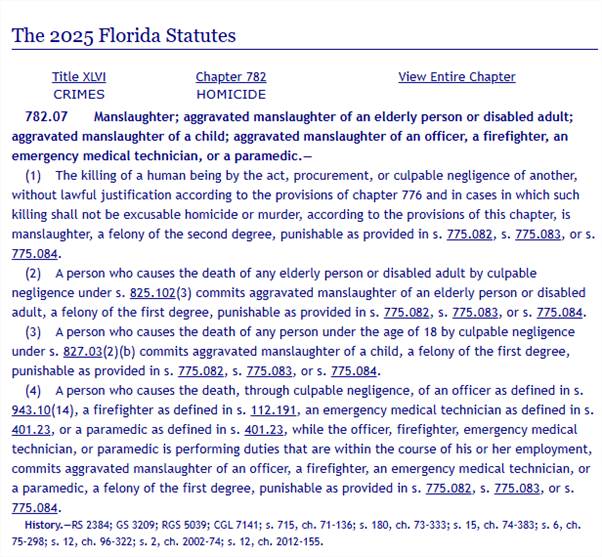
Tomado del sitio web oficial de la Legislatura de Florida.
Dado que se trata de cargos penales, la carga de la prueba es un factor fundamental en todos los casos. La instrucción estándar de Florida sobre la duda razonable explica que la duda debe ser razonable, no imaginaria, y centra la atención del jurado en si la evidencia les genera una convicción firme de culpabilidad. Este criterio suele influir en la estrategia más de lo que se espera, ya que la incertidumbre que podría ser tolerable en un tribunal civil puede ser decisiva en un tribunal penal.
Si se trata de evaluar el riesgo de forma realista, la pregunta más útil no es si algo "parece malo". La pregunta útil es si el Estado puede probar cada elemento requerido, incluido el elevado umbral de negligencia culpable, más allá de toda duda razonable con pruebas admisibles. Ahí es donde se deciden muchos casos.
Negligencia criminal frente a negligencia civil
La negligencia criminal y la negligencia civil pueden derivarse de un mismo incidente, pero tienen propósitos distintos y se rigen por normas diferentes. La negligencia civil se centra en la indemnización, mientras que la negligencia criminal se centra en el castigo y la seguridad pública. Incluso cuando coinciden los mismos hechos, el sistema legal trata ambas categorías de manera diferente, ya que persiguen objetivos distintos.
En casos de negligencia civil, la cuestión radica en determinar si alguien no actuó con la debida diligencia y causó daños que puedan probarse y cuantificarse. Las instrucciones para el jurado en casos civiles de Florida describen la negligencia según el estándar de diligencia razonable, razón por la cual la mayoría de las disputas por negligencia giran en torno a si la conducta fue irrazonable dadas las circunstancias y si causó legalmente el daño.
En casos de negligencia criminal, la cuestión radica en determinar si la conducta es tan peligrosa y se aleja tanto de las normas de seguridad aceptadas que cumple con la definición penal de negligencia culpable. Las instrucciones estándar para el jurado en casos penales de Florida definen la negligencia culpable como grave y flagrante, vinculada a una temeraria indiferencia hacia la vida o la seguridad humanas, lo cual representa un estándar más alto que la simple negligencia civil. Debe demostrarse que el acusado actuó con negligencia culpable, evidenciando un riesgo temerario en lugar de una mera negligencia.
El control del caso también es diferente. En un caso civil, la persona perjudicada decide si presenta una demanda, llega a un acuerdo o la desestimación, y la compensación suele ser económica. En un caso penal, el Estado procesa, y el resultado es culpable o inocente, con las consiguientes sanciones. Esta diferencia también afecta a las víctimas, ya que el sistema judicial penal no está diseñado principalmente para pagar gastos médicos ni compensar pérdidas económicas a largo plazo.
La carga de la prueba es otra diferencia fundamental. En los casos penales se requiere una prueba más allá de toda duda razonable, y las instrucciones estándar de Florida explican cómo deben considerar los jurados ese nivel de certeza. En los casos civiles, generalmente se utiliza una carga de la prueba menor, razón por la cual es posible que las disputas de responsabilidad civil continúen incluso cuando no se presentan cargos penales o no se obtiene una condena.
Las normas sobre culpa compartida también generan confusión. Las disputas por negligencia civil suelen implicar culpa comparativa, y la ley de Florida sobre culpa comparativa describe cómo la responsabilidad puede reducir los daños y, en muchos casos a los que se aplica, impedir la indemnización cuando se determina que una parte tiene más del 50 % de la culpa por su propio daño. En los casos penales, la culpa no se asigna en porcentajes, por lo que los conceptos de "negligencia comparativa" generalmente no constituyen una defensa directa contra la responsabilidad penal.
Si te encuentras atrapado entre estos dos mundos, una evaluación temprana y clara puede evitar errores costosos. Una estrategia civil y una estrategia penal pueden tener objetivos opuestos, y lo que digas o hagas en un ámbito a veces puede repercutir en el otro.
Ejemplos de negligencia criminal
Los casos de negligencia criminal suelen tener un denominador común: el riesgo de lesiones graves es tan evidente que ignorarlo se percibe como indiferencia, más que como un simple error de juicio. La ley no está diseñada para castigar cualquier resultado negativo, sino para castigar conductas que se ajustan a un delito y que pueden probarse más allá de toda duda razonable.
La ley de negligencia culpable de Florida es un ejemplo claro de cómo se puede imputar un descuido extremo. Aborda la exposición de otra persona a lesiones personales por negligencia culpable, y también contempla situaciones en las que la negligencia culpable causa lesiones personales reales, lo que crea una clasificación más grave cuando se produce un daño.
Las conductas de conducción temeraria constituyen una categoría común de casos de negligencia criminal. Algunos ejemplos incluyen exceso de velocidad en zonas residenciales, enviar mensajes de texto mientras se conduce con tráfico denso, carreras ilegales en vías públicas, conducir demasiado cerca del vehículo de adelante a alta velocidad, no respetar las señales de alto en zonas escolares, no ceder el paso provocando colisiones e incidentes de ira al volante que crean condiciones peligrosas para otros conductores. Estas situaciones de conducción pueden derivar en cargos penales cuando la conducta demuestra un desprecio flagrante por la seguridad de los demás.
Los accidentes laborales también pueden dar lugar a investigaciones por negligencia criminal cuando las empresas ignoran las normas de seguridad en el trabajo. Estos casos pueden involucrar a empleadores o supervisores que, a sabiendas, exponen a los trabajadores a condiciones peligrosas sin protección adicional, no mantienen el equipo a pesar de conocer los peligros o desobedecen los protocolos de seguridad obligatorios en entornos de construcción, fabricación o industriales.
Los casos relacionados con proveedores de atención médica representan otro contexto donde el estándar de atención se vuelve crucial. Si bien la mayoría de las demandas por negligencia médica siguen siendo civiles, las desviaciones extremas de los estándares de atención médica aceptados —como realizar procedimientos estando bajo los efectos de sustancias, ignorar síntomas que ponen en peligro la vida o brindar una atención médica gravemente inadecuada— pueden entrar en el terreno penal cuando la conducta demuestra una indiferencia consciente hacia la seguridad del paciente.
La ley de Florida también aborda los incidentes con armas de fuego mediante escenarios de seguridad específicos y de uso común. La ley de almacenamiento seguro de Florida cubre las circunstancias en las que una persona guarda o deja un arma de fuego cargada al alcance de un menor. Los casos relacionados con el almacenamiento negligente, las armas de fuego sin asegurar y los accidentes de tiro deportivo pueden dar lugar a cargos penales, especialmente cuando la supervisión inadecuada o la negligencia infantil contribuyen a las lesiones o la muerte. La ley describe cómo la responsabilidad y las penas más severas pueden aumentar cuando se cumplen las condiciones legales, a la vez que establece excepciones y requisitos específicos relevantes en casos reales.
Cuando hay un fallecimiento de por medio, los fiscales pueden evaluar si los hechos se ajustan al delito de homicidio involuntario. La ley de Florida sobre homicidio involuntario abarca el homicidio por acción, instigación o negligencia culpable, y lo define como un homicidio sin justificación legal, a diferencia del homicidio o asesinato excusable según la ley de Florida. Esta definición legal explica por qué estos casos suelen derivar en disputas sobre la clasificación, la causalidad y si las pruebas realmente justifican la comisión del delito. Las víctimas especiales, como los niños o los adultos vulnerables, pueden acogerse a disposiciones de protección adicionales según la ley de Florida.
En la práctica, los fiscales suelen hacer hincapié en las advertencias existentes, las medidas de seguridad que se ignoraron y la previsibilidad del riesgo. La defensa, por su parte, suele adoptar una postura opuesta, centrándose en la incertidumbre, las causas alternativas y si la conducta se está exagerando hasta el punto de considerarse "grave y flagrante". Las instrucciones estándar para el jurado en casos penales en Florida constituyen la base de esta controversia, ya que definen lo que el jurado debe determinar, no lo que resulte emocionalmente convincente.
Si un incidente puede calificarse como un trágico accidente o como una imprudencia criminal, lo más importante es dejar de basarse en suposiciones. Los hechos, los elementos y las pruebas necesarias determinarán el rumbo de la investigación, no la descripción sensacionalista.
Sanciones por negligencia criminal y directrices para la imposición de penas
En Florida, las penas dependen del cargo específico, la gravedad del delito y los antecedentes del acusado. Dos casos que suenan similares al hablar de ellos pueden tener consecuencias muy diferentes una vez que se aplican las decisiones sobre la acusación y las estructuras de sentencia.
La ley de negligencia culpable de Florida clasifica la exposición a lesiones personales por negligencia culpable como un delito menor de segundo grado, y la causación de lesiones personales reales por negligencia culpable como un delito menor de primer grado. Además, ciertas situaciones relacionadas con armas de fuego que involucran a menores pueden constituir un delito grave cuando se cumplen las condiciones legales.
La ley general de penas de Florida establece penas máximas de prisión según la gravedad del delito, incluyendo el tiempo máximo en la cárcel para delitos menores y el tiempo máximo en prisión para delitos graves. Estos máximos legales proporcionan un límite, pero no lo abarcan todo, especialmente en casos de delitos graves donde la puntuación y los agravantes pueden influir en la pena real. Una sentencia de cárcel puede variar de meses a años, dependiendo de la clasificación y las circunstancias.
La ley general de multas de Florida también establece multas máximas según la gravedad del delito, con límites distintos para delitos menores y delitos graves. Las sanciones económicas pueden ir acompañadas de penas de prisión, así como de libertad condicional y condiciones impuestas por el tribunal que afectan la vida diaria mucho después de que se resuelva el caso.
Cuando hay una muerte de por medio y se imputa homicidio involuntario, la ley de Florida clasifica el homicidio involuntario como un delito grave, y esta clasificación legal es una de las razones por las que las consecuencias se agravan drásticamente en las investigaciones de muertes por negligencia culpable.
Para la imposición de penas por delitos graves, Florida utiliza el Código Penal, un sistema estructurado que se basa en la puntuación de una hoja de cálculo para calcular el total de puntos de la sentencia. Este marco puede tener en cuenta la gravedad del delito, delitos adicionales, la gravedad de las lesiones sufridas por la víctima y los antecedentes penales, por lo que es peligroso asumir la responsabilidad penal basándose únicamente en el nombre del cargo. Pueden aplicarse penas más severas en casos que involucren víctimas especiales o factores agravantes.
Si buscas una conclusión práctica, es esta: las decisiones tempranas son cruciales. Las primeras declaraciones, las primeras medidas para preservar las pruebas y las primeras estrategias pueden influir en la formulación de cargos y en las negociaciones posteriores. Comprender los factores atenuantes y las circunstancias eximentes desde el principio puede determinar tanto la formulación de cargos como la sentencia.
Cómo se prueba la negligencia criminal en los tribunales
Para probar la negligencia criminal en Florida, los fiscales deben demostrar algo más que el hecho de que algo salió mal. El Estado debe presentar pruebas de que la conducta del acusado cumple con el elevado umbral de negligencia culpable y que cada elemento del delito imputado se prueba más allá de toda duda razonable.
Muchos casos se construyen a partir de una combinación de testimonios de testigos, pruebas físicas, registros digitales y análisis de expertos. Los testigos pueden describir la conducta, la presencia de advertencias, las prácticas de seguridad esperadas y lo que era visible en el momento. Las pruebas físicas pueden mostrar condiciones peligrosas, la falta de medidas de seguridad o el mecanismo de la lesión. Las pruebas digitales pueden establecer una cronología y el nivel de conocimiento del riesgo. Los expertos pueden abordar la identificación del riesgo y determinar si la conducta representa una desviación grave de las prácticas de seguridad aceptables.
Incluso con pruebas contundentes, la definición que el jurado debe aplicar constituye el eje legal del caso. Las instrucciones estándar para jurados en casos penales en Florida definen la negligencia culpable como aquella que requiere una conducta grave y flagrante que demuestre una temeraria indiferencia hacia la seguridad, no una negligencia ordinaria. Por ello, los juicios suelen convertirse en disputas sobre la caracterización de los hechos, ya que los mismos hechos pueden interpretarse como un descuido trágico, por un lado, y como una indiferencia criminal, por otro.
La duda razonable influye en cada etapa de un caso penal. La instrucción sobre la duda razonable en Florida enfatiza que los jurados deben llegar a una convicción firme de culpabilidad y reconoce que la duda puede surgir de contradicciones en las pruebas o de la falta de ellas. Esta es una de las razones por las que las lagunas en las pruebas pueden tener mayor peso en un tribunal penal que en uno civil, y por qué los plazos y la documentación pueden, de forma implícita, determinar el resultado.
Si se enfrenta a acusaciones, lo más sensato es preguntar qué puede probar realmente el Estado, no qué supone la gente que ocurrió. Este cambio de perspectiva suele revelar dónde reside realmente el riesgo y dónde la defensa puede generar dudas fundadas.
Defensas ante cargos de negligencia criminal
Las defensas en casos de negligencia criminal dependen en gran medida de los hechos específicos, pero suelen centrarse en algunos puntos clave. Una defensa común es que la conducta no alcanza el umbral de negligencia culpable. La defensa puede argumentar que el comportamiento fue descuidado, un error o negligencia ordinaria, pero no la conducta de desprecio grave, flagrante e imprudente que exigen las instrucciones al jurado en casos penales de Florida.
La causalidad es otro argumento clave de la defensa. Incluso si la conducta fue arriesgada, el Estado debe vincularla con la lesión o muerte alegada. Eventos intervinientes, acciones de terceros o incertidumbre en las pruebas médicas o cronológicas pueden generar dudas razonables. En casos graves, las disputas sobre la causalidad pueden ser cruciales, ya que un jurado puede desaprobar la conducta y aun así absolver si no está convencido de que esta causó el daño en la forma que exige la acusación.
La previsibilidad y la conciencia del riesgo suelen ser temas centrales en estas disputas. Los fiscales generalmente argumentan que el riesgo era obvio y que debió haberse reconocido, mientras que la defensa sostiene que el peligro se está reconstruyendo a posteriori. La definición de negligencia culpable en las instrucciones estándar de Florida suele ser el punto de partida de este argumento, ya que la define como algo más que un simple error, acercándose a la indiferencia consciente o la imprudencia temeraria.
Los factores atenuantes y las circunstancias excepcionales también pueden desempeñar un papel crucial en la estrategia de defensa. La evidencia del uso de fuerza razonable en legítima defensa, la falta de conocimiento previo de condiciones peligrosas o los factores intervinientes que interrumpieron la cadena causal pueden respaldar la narrativa de la defensa. En algunos casos, demostrar que las acciones del acusado fueron coherentes con las prácticas aceptadas en su campo o que tomó precauciones razonables puede refutar las acusaciones de negligencia grave.
En las investigaciones de muertes donde se considera homicidio involuntario, la clasificación estatutaria y el marco legal pueden convertirse en un campo de batalla. La ley de homicidio involuntario de Florida incluye la definición de "sin justificación legal" y distingue el homicidio involuntario del homicidio excusable y el asesinato según la ley de Florida, razón por la cual los argumentos legales pueden centrarse en qué categoría respalda realmente la evidencia.
Si estás bajo investigación, uno de los errores más comunes y perjudiciales es intentar aclarar la situación mediante conversaciones informales con las autoridades. Incluso las declaraciones hechas de buena fe pueden malinterpretarse o utilizarse posteriormente como argumentos para la acusación. Una estrategia bien planificada suele protegerte mejor que confiar en que las cosas se aclararán más adelante.
Cuándo contactar a un abogado por cargos de negligencia
Si se trata de negligencia criminal, el mejor momento para hablar con un abogado penalista de Sarasota es cuanto antes, antes de que la versión de los hechos se consolide. Si la policía quiere interrogarlo, si se entera de que lo culpan de lesiones graves o si ocurrió una muerte y los investigadores están haciendo preguntas, esos son momentos para actuar con calma y proteger su futuro.
Esperar hasta que se presenten los cargos puede limitar las opciones. Una vez formalizado el caso, el proceso se vuelve más rígido y los errores iniciales pueden ser difíciles de corregir. Una evaluación e investigación exhaustivas del caso pueden ayudarle a comprender qué debe probar el Estado, qué pruebas existen, qué pruebas faltan y cómo evitar errores innecesarios que empeoren la situación.
Abogados litigantes con experiencia pueden ofrecerle estrategias de defensa personalizadas, adaptadas a sus circunstancias específicas, brindarle apoyo legal integral durante todo el proceso y guiarle en el desarrollo de su estrategia legal desde la investigación inicial hasta el juicio, si fuera necesario. Una evaluación exhaustiva del caso permite a su abogado identificar las debilidades de la acusación, preservar pruebas cruciales y construir una defensa que aborde tanto los aspectos legales como los hechos.
Este tema también tiene otra perspectiva. Si usted es la persona perjudicada por la extrema negligencia de otra persona respecto a la seguridad, es posible que un tribunal penal no aborde las consecuencias económicas y personales que está sufriendo. Los procedimientos penales están diseñados para determinar la culpabilidad e imponer sanciones, no para compensar íntegramente las pérdidas como lo hacen los recursos civiles.
Si desea una evaluación práctica y serena de su situación y de los pasos a seguir, el bufete de abogados de John P. Sherman, PLLC puede ayudarle a analizar los hechos antes de tomar decisiones irreversibles. Ofrecemos una consulta gratuita para hablar de su caso, revisar las pruebas y explicarle sus opciones. Nuestro enfoque combina un análisis legal exhaustivo con orientación práctica, y los testimonios de nuestros clientes reflejan nuestro compromiso con la protección de sus derechos y su futuro.