Personal Injury
What Is the Statute of Limitations for Negligent Security in Florida?
•
5 min
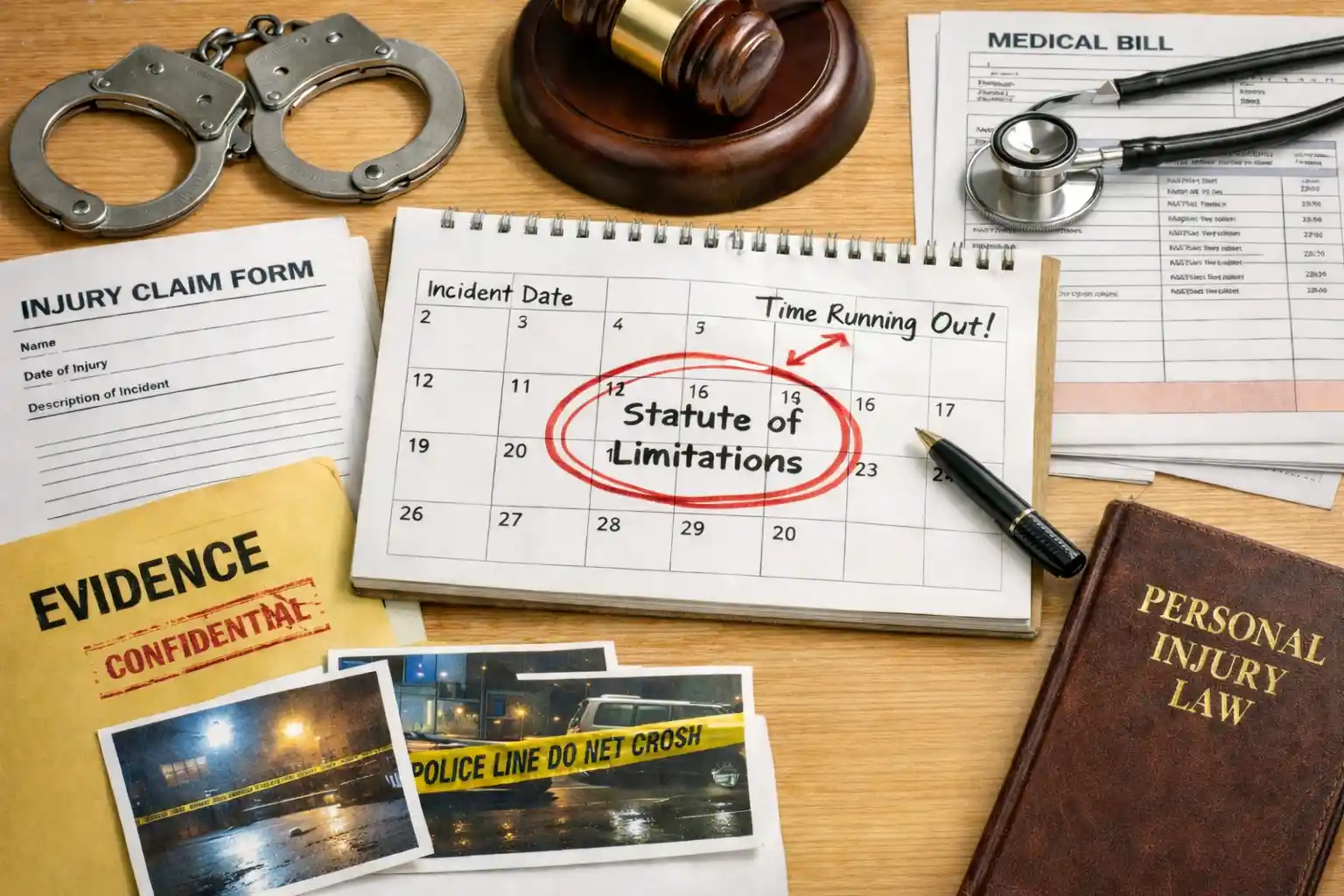
When you are attacked, assaulted or robbed on someone else’s property, the shock does not end when you leave the scene. Medical bills begin to arrive, you may not feel safe in public spaces, and you might be unable to work for weeks or months. At the same time, friends, family or even online articles keep saying that you “need to talk to a lawyer before it is too late” or that “Florida has strict deadlines now.” Many negligent security victims feel trapped between needing time to heal and the fear that if they wait too long, the law will quietly close the door on their case.
This is where the statute of limitations becomes crucial. In Florida, there is now a relatively short-time window to file most negligence-based lawsuits, including negligent security claims against property owners and businesses. Recent changes in Florida law have reduced that window, especially for incidents that happened on or after March 24, 2023. That is why old advice about “having four years” is often no longer accurate, and why relying on outdated information can put your claim at risk.
If you were attacked in a parking lot, apartment complex, hotel, bar or other property in or around Miami and you are worried about whether you still have time to bring a negligent security claim, you do not have to guess based only on what you read online. Before the deadline becomes an emergency, a consultation with the Law Office of John P. Sherman can help you confirm your exact time limit, understand how Florida’s statute of limitations applies to your case and start protecting your rights while you focus on healing.
Understanding Negligent Security Claims in Florida
Negligent security is a type of premises liability claim that focuses on crimes committed by third parties on someone else’s property. The basic idea is that certain crimes are reasonably foreseeable in some locations and situations, and when property owners fail to take basic safety measures, they can be held responsible for injuries that result from that failure. For example, an apartment complex with a history of break ins that leaves gates broken and lights out in the parking lot may be liable if a resident is assaulted there. Florida premises liability law recognizes that property owners and operators have a duty to take reasonable steps to protect lawful visitors from foreseeable criminal acts.
In a typical negligent security case, the victim is not arguing that the property owner personally attacked them. Instead, the claim focuses on the owner’s lack of reasonable security measures that made the criminal act much more likely. These failures can take many forms. Common examples include missing or broken lighting, non-functioning security cameras, doors or gates that do not lock properly, lack of security personnel in high risk areas, poor crowd control at bars and clubs or ignoring a known pattern of prior crimes on or near the property. When these security gaps exist in places like parking garages, hotels, nightclubs, gas stations, shopping centers or multi-family housing, they can turn those spaces into predictable danger zones.
To succeed, negligent security claims usually must show four basic elements. First, that the property owner or operator owed a legal duty to people who were lawfully on the property. Second, they breached that duty by failing to provide reasonable security considering the risks. Third, a criminal attack occurred which was reasonably foreseeable under the circumstances. Fourth, the injuries and losses you suffered were directly caused by that combination of inadequate security and criminal conduct. Because these cases often involve serious physical injuries, emotional trauma and long-term financial losses, understanding how much time you have to bring a lawsuit becomes just as important as proving what went wrong.
Florida’s Statute of Limitations for Negligent Security Cases
Florida sets time limits for almost all civil lawsuits through its statutes of limitations, which are found in Chapter 95 of the Florida Statutes. Negligent security cases fall under the broader category of negligence based personal injury claims. Since they involve injuries caused by a property owner’s failure to provide reasonable security, they are treated like other negligence cases for limitation purposes.
Historically, Florida allowed four years to file most negligent actions, including many premises liability and negligent security claims. That changed when the Legislature passed House Bill 837, a major tort reform law that became effective on March 24, 2023. HB 837 amended section 95.11 to shorten the limitations period for general negligence actions from four years to two years for claims that accrue on or after that effective date. Claims that accrued before the change are generally still subject to the older four-year rule.
Today, under the current version of section 95.11, most negligence claims must be filed within two years of the date the cause of action accrues. In a negligent security case, that usually means two years from the date you were injured in the incident that was caused, at least in part, by inadequate security. From a practical standpoint, this gives victims much less time than before to investigate what happened, obtain records, seek legal advice and prepare a lawsuit.
To make the change easier to visualize, you can think of it this way:
Incident Date | General Negligence Limitations Period | How It Typically Applies to Negligent Security |
Before March 24, 2023 | Usually 4 years | Many older negligent security incidents follow the prior four-year rule |
On or after March 24, 2023 | Usually 2 years | Most newer negligent security incidents are subject to the new two-year deadline |
Borderline dates around March 24, 2023 | Depends on when the claim accrued | Requires careful legal analysis to avoid mistakes |
The 2-Year Time Limit Explained
The two-year statute of limitations means that for most negligent security incidents that happened on or after March 24, 2023, an injured person generally has two years from the date of the incident to file a lawsuit in court against the responsible parties. If you were attacked in June 2024 in a poorly lit hotel parking lot, for example, you would usually need to file your negligent security lawsuit no later than June 2026. Filing even a few days late can give the defendants a strong basis to ask the court to dismiss your case as time barred.
There are two nuances that many people miss when they try to calculate this deadline on their own. First, the law change is not fully retroactive. Florida’s tort reform specifies that the new two-year deadline applies to causes of action that accrue after March 24, 2023. Claims that accrued before that date remain subject to the prior four year limitations period. Second, the limitations measures the time to file a lawsuit, not to report the incident to the property owner or to start an insurance claim. You can be actively talking to an insurance adjuster for many months, but unless a specific tolling rule applies, those negotiations do not stop the limitations clock.
It is also important to understand that the two-year period is a maximum, not a recommended waiting time. Waiting until the last months or weeks to contact a lawyer can make it much harder to investigate your case properly. Security camera footage may be overwritten, witnesses may be harder to reach, and employee turnover may make it difficult to learn how security was actually handled. Acting earlier within the two-year window gives your attorney more time to collect evidence, analyze the property’s history and file a strong complaint before the deadline becomes a crisis.
When Does the Statute of Limitations Clock Start?
Under Florida law, a civil cause of action generally accrues when the last element constituting the cause of action occurs. For negligence claims, courts interpret this to mean that the clock starts when the negligent act or omission causes an actual injury that produces damages. In a negligent security case, that is almost always the date when the criminal attack or assault happens on the property and causes you harm.
For most victims, the injury date and the date they realize something went wrong are the same. If you are assaulted in a stairwell with broken lighting, you know you were attacked and injured immediately. That is why the statute of limitations for negligent security usually starts on the date of the incident, not weeks or months later. Even if you do not yet know the full extent of your injuries, and even if you later need additional surgeries or long-term therapy, the initial injury is what triggers the countdown for limitation purposes.
There are situations, however, where the timing can feel less obvious from a victim’s perspective. For example, you might later learn that the property had a long history of similar crimes, or that the security cameras that you assumed were working were actually fake or never monitored. You might also discover that a separate management company or security contractor shared responsibility for the property. These facts can strongly affect how your claim is built and whom you sue, but they do not usually restart the limitations clock in Florida negligent security cases. The general rule still focuses on the date when the negligent security and the criminal act came together to cause your injury.
If you are recovering from a violent incident and are unsure how the law calculates your specific deadline, you do not have to try to interpret accrual rules on your own while dealing with pain, fear and financial stress. Speaking with an experienced negligent security attorney as soon as possible can help you identify the exact incident date that matters, understand how Florida’s accrual and limitations rules apply and plan your next steps with a realistic timeline in mind.
Exceptions That May Extend the Filing Deadline
Like many states, Florida includes certain tolling rules and special exceptions that can pause or extend the statute of limitations in narrow situations. These rules appear mainly in section 95.051 of the Florida Statutes, which lists the circumstances that toll most limitation periods. Florida law is clear that tolling is limited to the situations listed in the statute, and that courts are not free to create new tolling rules based on general notions of fairness.
Some of the tolling situations that can appear in negligent security cases include a defendant who is absent from the state and cannot be served despite reasonable efforts, a defendant who uses a false name or actively conceals themselves so that service is impossible, or a situation where the injured person has been adjudicated incapacitated before the cause of action accrues. There are also specific provisions related to minors when there are serious conflicts of interest between the child and the adults who would normally act on their behalf.
Even when one of these tolling grounds is present, it does not automatically stop the limitations clock forever. Tolling is usually limited in time and scope, and it often requires clear proof that the statutory conditions were met. Because of this, it can be risky to assume that you have extra time simply because a defendant is hard to find or because the victim is a child. A lawyer who understands Florida’s tolling framework can examine the details of your case and advise whether any exception is likely to apply before the standard deadline runs out.
Discovery Rule in Negligent Security Cases
People sometimes hear about a “discovery rule” and assume it means the statute of limitations will not start until they learn exactly who is responsible or until they discover every detail of what went wrong. In Florida, the discovery rule is much narrower than in some other states. Section 95.031 explains that, as a general principle, the time to file runs from accrual, which is when the last element of the cause of action occurs. Only certain types of claims, such as fraud, some product liability cases and medical malpractice, have explicit discovery rules written into the statute.
For negligent security, courts usually treat the claim like other negligent actions. The cause of action accrues when the negligent security and the criminal act combine to cause an injury that produces damages. Learning later that the property had a long history of crime, that lights were out for weeks or that cameras were never monitored does not normally push the accrual date forward. Those facts are extremely important for proving negligence and foreseeability, but they rarely change the statute of limitations calculation. In other words, discovering new evidence later does not usually give you new time to sue.
There may be unusual cases where an injury is truly latent and not discoverable for some time, or where fraud or active concealment overlaps with negligent security issues. For example, if a property owner deliberately falsified incident logs or altered camera footage in a way that prevented you from discovering the role of negligent security until much later, there might be arguments about delayed discovery or equitable principles. These situations are the exception, not the rule. If you think your case involves late discovered injuries or deliberate concealment, it is especially important to talk to a lawyer quickly so they can evaluate whether any discovery-based arguments might apply while there is still time to file.
Tolling for Minors and Incapacitated Victims
Negligent security incidents often affect some of the most vulnerable people, including children and adults with cognitive or mental impairments. Florida law recognizes that not everyone can quickly file a lawsuit on their own, so it includes special tolling rules for minors and incapacitated persons in section 95.051. In general, the statute of limitations can be tolled when the injured person is a minor or has been adjudicated incapacitated and there is no capable parent, guardian or guardian ad litem who can sue on their behalf, or where those guardians have interests that conflict with the victim’s interests.
Even when tolling applies to minors or incapacitated victims, there is an important outer limit. Florida statutes provide that, in any event, the action must be started within a certain maximum period, often described as seven years from the date of the act, event or occurrence giving rise to the cause of action. That means that in negligent security cases involving minors or incapacitated victims, the limitations period may be extended, but it cannot be extended indefinitely. Parents or guardians can often bring claims on behalf of injured children well before those seven years expire, and waiting for the child to become an adult is not always necessary or wise.
From a practical standpoint, waiting many years can also create serious evidentiary problems. Security videos may be deleted, businesses may close, employees and witnesses may move away and physical conditions on the property may change completely. These realities make it harder to prove what security measures were or were not in place at the time of the attack. If your child or a family member with cognitive limitations was hurt because of inadequate security, speaking with a lawyer early can help you decide whether to act now, how the tolling rules apply and how to preserve crucial evidence while it still exists.
What Happens If You Miss the Statute of Limitations?
Missing the statute of limitations is one of the harshest outcomes in civil law. If you file your negligent security lawsuit after the applicable limitations period has expired, the defendant can ask the court to dismiss the case as time barred. If the court agrees that the statute has run and no tolling or exception applies, your case will usually be dismissed permanently, regardless of how strong your evidence is or how serious your injuries are.
This result can feel deeply unfair to victims who were focused on healing, trying to negotiate with an insurance company or simply did not know about the deadline. However, courts view statutes of limitations as rules that protect all parties by providing finality and by encouraging claims to be brought while evidence is still reasonably fresh. Once the deadline passes, even a clearly negligent property owner can often avoid legal responsibility if no timely lawsuit was filed.
Insurance companies understand these rules very well. They know that if a claim is not filed before the statute of limitations expires, their legal exposure usually drops dramatically. This is one reason why adjusters sometimes seem in no hurry to resolve a claim or may ask for additional information repeatedly. While there is nothing wrong with negotiating, it is vital to remember that talking to an insurance company does not stop the limitations clock. The safest approach is to have an attorney tracking your lawsuit deadline in the background so that you do not lose your rights while you are waiting for a settlement offer that may never come.
Types of Negligent Security Cases Covered by This Timeline
The two-year negligence statute of limitations applies to a wide range of negligent security claims in Florida because they are all grounded in the same basic theory: a property owner or operator failed to provide reasonable security, and that failure allowed a foreseeable crime to occur and cause harm. The specific facts vary from case to case, but the overall timing rules are similar.
Common examples of negligent security cases that fall under this timeline include assaults or robberies in parking lots, garages and stairwells with poor lighting or no surveillance; attacks in apartment complexes where gates, locks or entry systems are broken or easily bypassed; bar, club or restaurant incidents where inadequate security staff or crowd control leads to violent fights; hotel or motel attacks due to unmonitored side entrances, non-functioning cameras or failure to address known criminal activity on the property; and gas station or convenience store attacks in areas with a history of robberies where owners fail to take reasonable security measures.
To connect these situations back to the statute of limitations, you can think of different scenarios in a simple table:
Type of Negligent Security Scenario | Typical Legal Theory | Usual Limitations Period if Injury After 3/24/2023 |
Apartment complex assault | Premises liability based on inadequate security | 2 years from date of attack |
Parking lot robbery at a shopping center | Premises liability negligence | 2 years from date of attack |
Nightclub or bar fight due to lack of security staff | Premises liability negligence | 2 years from date of injury |
Hotel hallway or stairwell attack | Premises liability negligence | 2 years from date of attack |
Gas station assault in a known high crime location | Premises liability negligence | 2 years from date of attack |
Florida has also created specific statutory provisions for certain multifamily residential properties that implement prescribed security measures. Those provisions can affect how liability and presumptions are analyzed in some negligent security cases, but they do not change the basic limitations period that applies to negligence-based claims. For almost all negligent security timing questions, the starting point is the same: identify the date of the injury, determine whether it occurred before or after March 24, 2023, and then apply the appropriate two- or four-year rule, subject to any valid tolling.
Steps to Take After a Negligent Security Incident
What you do in the hours, days and weeks after a negligent security incident can significantly impact both your recovery and your legal options. At the same time, no one expects you to think like a lawyer in the middle of trauma. The goal is not perfection. The goal is to take a few practical steps that protect your health, your evidence and your ability to file a claim within Florida’s statute of limitations.
First, prioritize your medical care. Go to an emergency room, urgent care clinic or your doctor as soon as possible, even if you believe your injuries are “just bruises” or you are trying to be strong for your family. Many serious injuries, including concussions and internal damage, do not show their full symptoms right away. Telling medical providers that your injuries resulted from an attack or crime on specific premises also creates a documented link between the incident and your condition. Keep copies of all reports, imaging, referrals and bills. These records will guide your treatment and will later help demonstrate your damages.
Second, document and report what happened. If possible, report the incident to law enforcement and obtain a case number or report. This helps establish the date, time and location of the attack, which are core details for calculating the statute of limitations. If you are able, take photos or videos of the area where the attack occurred, focusing on security issues such as broken lights, unlocked doors, missing cameras or lack of visible security presence. Try to write down what you remember as soon as you can, including any comments made by employees or witnesses. If your injuries or trauma make this impossible, ask a trusted friend or family member to help with these steps as soon as it is safe to do so.
Third, consult a negligent security attorney promptly, especially once your immediate medical needs are addressed. Waiting until the end of the limitations period often makes it harder to preserve evidence and to track down records or videos that may have been deleted. An attorney can send preservation letters to property owners, request security footage, identify all potentially responsible entities and calculate your filing deadline under Florida’s updated statutes. If you want someone to focus on preserving your claim and keeping the statute of limitations from becoming a trap while you focus on healing, the Law Office of John P. Sherman can step in to guide that process and handle the legal side for you.
FAQS


