Personal Injury
Vicarious Negligence: When Someone Else Is Liable for Another's Actions
•
5 min
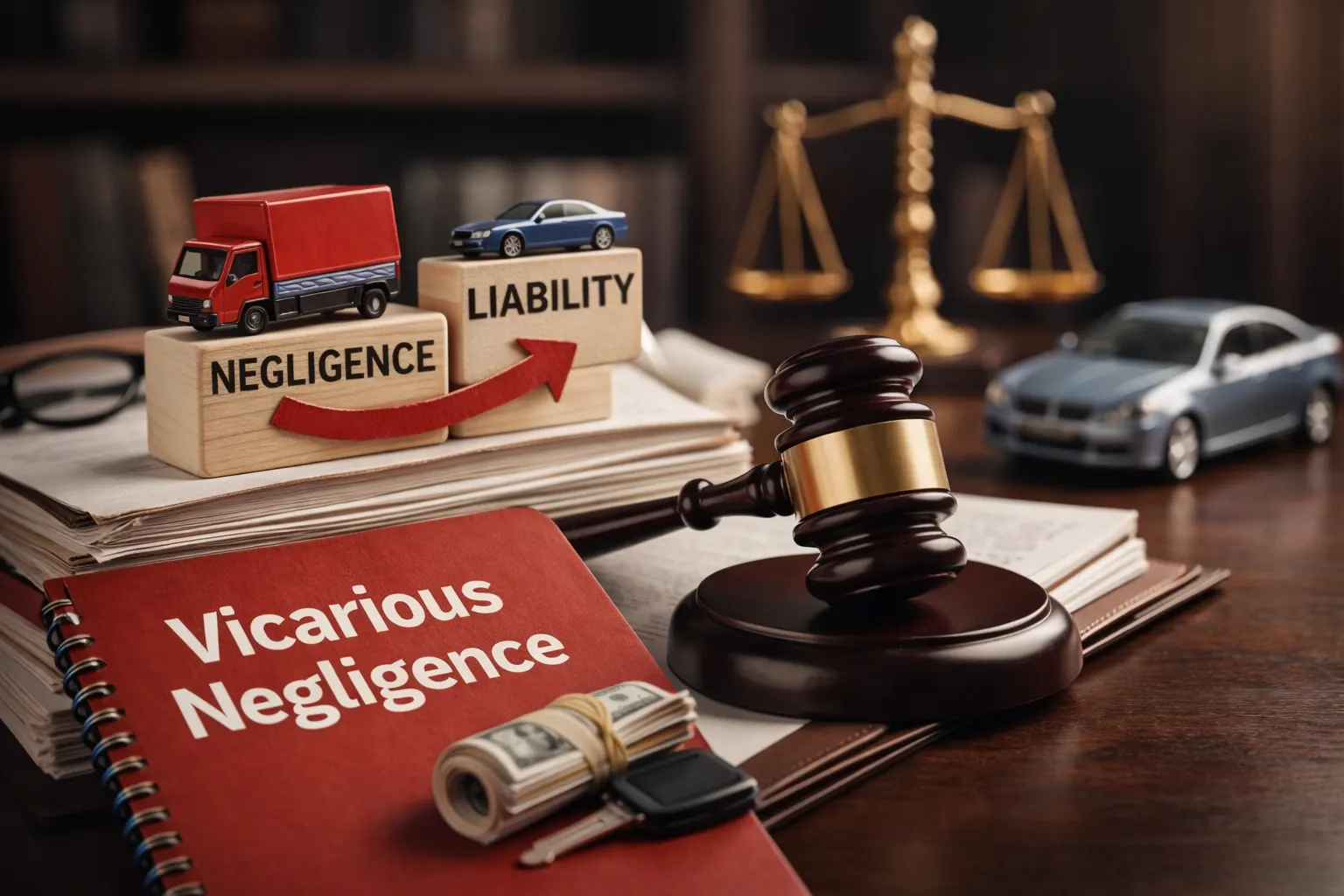
When you are hurt in an accident, your first instinct is usually to blame the person who directly caused it. Maybe it was a careless driver, a distracted security guard or a store employee who left a dangerous spill on the floor. Very quickly, another question appears: who is really going to pay for this, the individual who made the mistake or the company, parent or vehicle owner standing behind them. For many injured people, the idea that someone else can be legally responsible for another person’s negligence feels confusing or even unfair, until they see what their medical bills and lost income look like in daily life.
This is where the concept often called vicarious negligence, more accurately vicarious liability for negligence, becomes crucial. Vicarious liability allows you to bring a claim not just against the person who directly caused the harm, but also against a company, vehicle owner or parent who has a legally recognized relationship with that person. In practice, that often means you can pursue compensation from the party who actually has insurance coverage or assets, instead of relying only on an individual who may never be able to pay a serious judgment. It is one of the key legal tools that prevents injured people from being left with an empty victory.
If you were injured in Florida in a car crash, a workplace incident, a negligent security situation or another accident and you are unsure whether you can hold a business, employer or parent responsible, you do not have to decode vicarious liability by yourself. By speaking with the Law Office of John P. Sherman, you can get clear guidance on whether another party may share responsibility for your injuries and how that could change the strategy and potential value of your personal injury case.
What Is Vicarious Negligence?
Vicarious negligence is a shorthand way of talking about vicarious liability for negligent acts. In simple terms, this type of negligence is a legal rule that makes one person or entity responsible for harm caused by someone else’s carelessness because of the relationship between them. The most common example appears in employer and employee situations. If an employee causes an accident while doing their job, the employer can often be held liable, even if the employer did not personally make any mistake at the scene. The law essentially says that because the employer benefits from this person’s work and controls what they do, the employer can also be responsible when the worker is negligent in that work.
Legal scholars usually refer to this concept as vicarious liability rather than vicarious negligence, because the party being sued may not have done anything negligent themselves. The negligence belongs to the person who directly caused the harm, and the liability is imputed to the employer, vehicle owner or parent because of a special legal relationship. Many legal explanations describe vicarious liability as a form of strict liability within that relationship, because the plaintiff does not have to show that the employer or principal did anything wrong besides being responsible for the negligent person.
From the injured person’s perspective, vicarious liability matters for very practical reasons. An individual employee, teen driver or other negligent person may have little or no money, limited insurance and no realistic way to pay for major medical bills, lost wages and long-term care. A company, vehicle owner or other responsible party is much more likely to have an insurance policy and assets that can actually cover a significant judgment or settlement. Vicarious liability rules are designed to shift the risk of harm to the parties who are in the best position to supervise, insure and spread the cost of accidents, rather than leaving victims to absorb those losses alone.
Vicarious Negligence vs. Direct Negligence: Understanding the Difference
It is important to distinguish between vicarious negligence and direct negligence, because the two theories often appear together in the same lawsuit. Direct negligence focuses on what the defendant did or failed to do personally. For example, a company might be directly negligent if it failed to train employees properly, ignored safety complaints, hired an unqualified driver or created policies that encouraged dangerous shortcuts. In those cases, the claim is that the company itself fell below the standard of reasonable care, independent of any particular employee’s mistake.
Vicarious negligence, on the other hand, does not require proof that the company, parent or vehicle owner made a separate mistake. Instead, it focuses on the relationship that allows one party to be held liable for another’s negligence. Under this theory, if an employee was negligent while acting within the scope of their job, the employer can be held liable even if it had excellent training policies and a spotless safety record. The same is true of a vehicle owner who loans a car to someone, or a parent who signs a teen’s driver license application. The law connects the responsible party and the negligent person for liability purposes because of that defined relationship.
One way to picture the difference is to think about two separate questions a court might ask in a personal injury case. First, did the person who directly caused the harm act negligently. Second, is there another party whose relationship with that person makes them legally responsible for that negligence. The first question leads to direct liability for the person who acted. The second question leads to vicarious liability for employers, principals, vehicle owners or parents, depending on the facts. Many serious injury lawsuits pursue both types of claims at once, because that provides more than one path to full compensation.
To make the distinction easier to see, it helps to compare them side by side:
Type of Liability | Focus of the Claim | Example Scenario | What the Plaintiff Must Prove About This Defendant |
Direct negligence | Defendant’s own careless acts or omissions | Company failed to maintain brakes on its delivery trucks | The defendant personally breached a duty of care |
Vicarious liability | Responsibility for another person’s negligence | Employee crashes into someone while making deliveries | The negligent person was in a qualifying relationship and acting within its scope |
Combination of both | Defendant’s own negligence and responsibility for another’s negligence | Company both failed to train drivers and driver was careless | Both the direct negligence and the vicarious relationship apply |
Legal Theories Behind Vicarious Liability
Vicarious liability does not arise by accident. Courts and legislatures have developed specific legal doctrines that determine when one party can be held responsible for another’s negligence. Although details vary by state, the main theories in personal injury cases include the doctrine of respondeat superior, agency law principles and, in some situations, special statutory doctrines such as vehicle owner liability under dangerous instrumentality rules.
At the core is the idea of control and benefit. If one person or entity has the right to control another’s work or actions and benefits from that work, the law often concludes that they should also bear the cost when those actions cause harm. This logic appears both in traditional common law decisions and in more modern statutes that specifically impute liability to employers, vehicle owners and parents in certain situations.
Understanding these legal theories matters because insurance adjusters and defense attorneys will often argue that their client does not fit within any of the categories that create vicarious liability. They may claim that the negligent person was an independent contractor, not an employee, that they were acting outside the scope of their job or that a parent or vehicle owner did not have the level of control or consent the law requires. Knowing the basic doctrines helps you see why these arguments appear and how an experienced personal injury lawyer can push back against them.
Respondeat Superior Doctrine
Respondeat superior is a Latin phrase that roughly means “let the master answer.” In modern law, it is the primary doctrine that makes employers vicariously liable for the negligent acts of their employees when those acts occur within the scope of employment. Many tort law explanations describe vicarious liability through the lens of respondeat superior, especially in cases involving car accidents, slip and falls, security failures and other everyday personal injuries.
For respondeat superior to apply, there usually must be a genuine employer employee relationship, not just a loose association or a purely contractual relationship with an independent contractor. The employee’s conduct must also occur within the scope of employment. This does not mean that the employer approved of the negligent act, but rather that the act was related to the kind of work the employee was hired to do, took place during work hours or on the job and was at least partly intended to serve the employer’s business. A delivery driver who rear ends someone while making scheduled deliveries is a classic example of conduct within the scope of employment.
Courts spend a lot of time drawing lines around this doctrine. If an employee causes an accident while running a purely personal errand on their lunch break, without any benefit to the employer, a court may find that they were not acting within the scope of employment and that respondeat superior does not apply. In other cases, small detours or mixed personal and business purposes still fall within the scope. Because these distinctions are fact intensive and can strongly affect who is liable, injured people benefit from having an attorney analyze whether the employer can be brought into the case under respondeat superior.
Agency Relationships and Vicarious Liability
Vicarious liability is not limited to formal employment relationships. It also arises from broader agency principles. Under agency law, a principal can be held liable for the acts of an agent when the agent is acting with actual or apparent authority on the principal’s behalf. In many everyday injury cases, the employer employee relationship is simply one specific form of principal and agent, but the same logic can apply in other contexts, such as business partnerships, franchise relationships or situations where someone is given authority to act in another’s name.
Agency based vicarious liability typically requires three elements. First, there must be a recognized principal agent relationship, either because the principal expressly authorized the agent to act or because the principal’s conduct reasonably led others to believe that such authority existed. Second, the agent must have been acting within the scope of that authority when the negligent act occurred. Third, the plaintiff’s harm must be closely connected to the agent’s authorized activities. When these conditions are met, the principal can be held liable even if it was not personally negligent.
In some industries, these agency questions are central to disputes about who should pay. Hospitals sometimes argue that doctors are independent contractors, not agents or employees, in an effort to avoid vicarious liability for medical negligence. Ride share companies often dispute that drivers are their agents or employees. Even outside of those battles, agency law often plays a quiet but important role in determining whether a deep pocket defendant can be brought into a case to ensure that an injured person has access to meaningful compensation.
Common Examples of Vicarious Negligence Cases
Vicarious negligence concepts can sound abstract until you see them in real world situations. In practice, they appear across a wide range of personal injury cases, from car accidents to premises liability and professional negligence. Recognizing the pattern can help you and your attorney identify every potentially responsible party when you are building your claim.
In company vehicle and delivery cases, a delivery truck driver who runs a red light and causes a crash while completing assigned routes creates a classic vicarious liability scenario. The injured person can typically sue both the driver and the employer. The driver is directly negligent, while the employer is vicariously liable under respondeat superior. In Florida, vehicle owner liability and the dangerous instrumentality doctrine can add additional layers, holding the owner of a motor vehicle responsible when they voluntarily entrust it to someone who then operates it negligently.
In store, restaurant and hotel cases, a store employee who negligently leaves a spill on the floor and causes a customer to slip and fall creates liability for the business itself. The store is usually the main defendant, even though it was an individual worker who failed to clean the spill. The same pattern applies to negligent security cases where a security guard fails to follow protocols, or to construction site accidents where a crew member operates equipment carelessly. The business entity benefits from the work and controls how it is done, so the law allows injured visitors, customers and members of the public to pursue claims against that entity.
In parent and minor cases, many states, including Florida, have statutes that make parents or guardians liable for certain acts of their minor children, especially when the children cause property damage through vandalism or injure someone while driving a vehicle. In these situations, the minor’s negligence or intentional misconduct is imputed to the parent up to specific statutory limits, creating a form of vicarious liability that helps victims recover compensation from an adult who has greater ability to pay.
To organize some of these situations, consider this table:
Scenario | Negligent Actor | Vicariously Liable Party | Typical Legal Theory |
Delivery driver causes crash on route | Employee driver | Employer or delivery company | Respondeat superior, agency, dangerous instrumentality |
Store worker ignores spill, customer falls | Store employee | Store or supermarket | Respondeat superior |
Security guard fails to act, victim attacked | Security guard | Security company, property owner or both | Respondeat superior and premises liability |
Teen driver causes car accident | Minor child | Parent or guardian, vehicle owner | Statutory vicarious liability and vehicle owner doctrines |
Minor vandalizes property | Minor child | Parent or guardian | Parental responsibility statute |
Employer Liability for Employee Negligence
Employer liability for employee negligence is probably the most familiar and widely used form of vicarious liability. In Florida and across the United States, employers are routinely held responsible when their employees cause accidents in the course of their work. That can include car crashes, slip and falls, construction site injuries, negligent security incidents and many other kinds of harm that occur while employees are performing job related tasks.
For vicarious employer liability to apply, two main conditions usually must be met. First, there must be an actual employer employee relationship, not just a contract with a genuinely independent contractor. Courts look at factors such as who controls the details of the work, who provides tools and equipment and how payment is structured when deciding whether someone is an employee. Second, the negligent act must occur within the scope of employment. That generally means the employee was doing something related to their job during work time or on a work assignment, even if they made a poor decision in how they did it. Deviations for purely personal reasons, a kind of “frolic,” are less likely to create employer liability.
Florida law adds some additional layers, especially in motor vehicle cases. Under the dangerous instrumentality doctrine and related financial responsibility statutes, the owner of a motor vehicle who entrusts it to another person can be held vicariously liable for that person’s negligent operation of the vehicle, subject to certain statutory limits. This doctrine often overlaps with employer liability when an employer owns the vehicle and an employee is driving it, but it can also apply to individual owners who allow others to borrow their cars.
For someone who has been injured, including the employer in the claim can make a critical difference. Employers are more likely to have commercial insurance policies with higher limits, and they are often better positioned to satisfy a judgment than individual employees. At the same time, employers and their insurers may aggressively argue that the employee was acting outside the scope of employment or that the worker was an independent contractor. If you suspect that the person who hurt you was on the job or driving a company vehicle, speaking with a knowledgeable Florida personal injury attorney early can help you protect your right to pursue the employer before important evidence disappears.
When Parents Can Be Held Vicariously Liable for Children
Parental liability for the acts of children is another area where vicarious negligence concepts appear, though the rules vary significantly from state to state. In general, many states have statutes that impose limited civil liability on parents or guardians for certain wrongful acts committed by their minor children. These laws often focus on intentional misconduct, such as vandalism or theft, and set caps on the amount of damages a parent can be required to pay.
Florida illustrates how this works in practice. State statutes allow civil actions against parents of a minor who maliciously or willfully destroys or steals property. Separately, Florida law provides that any negligence or willful misconduct of a minor under the age of eighteen, while driving a motor vehicle, is imputed to the person who signed the minor’s driver license application, making that person jointly and severally liable with the minor for damages caused by such negligence or willful misconduct. These statutes create specific, targeted forms of vicarious liability for parents in property damage and motor vehicle contexts.
There are also situations where parents can face direct negligence claims, such as negligent supervision, when their own failure to supervise or control a child leads to harm. That is different from pure vicarious liability, because the claim targets the parent’s own conduct, not just the child’s. In many cases, plaintiffs will explore both avenues, looking to see whether a parental responsibility statute applies and whether there is evidence that a parent knew about a child’s dangerous tendencies but failed to take reasonable steps. If you are injured by a minor’s actions in Florida, talking with an attorney who understands both statutory parental liability and general negligence law can help you identify every possible source of recovery.
Proving Vicarious Negligence in Personal Injury Claims
Proving vicarious negligence, or more precisely vicarious liability for negligence, requires more than simply pointing to the relationship between two people. Courts and insurers expect clear evidence that ties the negligent act to a qualifying relationship and shows that the act occurred within the scope of that relationship. The stronger your proof on those points, the harder it will be for defendants to argue that they should not be held responsible for someone else’s conduct.
In an employer employee case, key evidence often includes work schedules, job descriptions, dispatch records, time logs, vehicle assignments and internal policies that show the employee was on duty, following instructions or using company equipment when the accident occurred. In vehicle owner liability situations, registration records, loan agreements and insurance policies can show who owned the vehicle and whether it was loaned with permission. In parental liability cases, birth certificates, custody records and driver license applications can help establish the necessary relationships and consents.
Proving vicarious liability also means paying close attention to how defendants frame their defenses. Employers may attempt to classify workers as independent contractors, even when they control day to day work in ways that look very much like an employment relationship. They may claim that the employee was on a purely personal errand, that vehicle use was unauthorized or that a minor took a car without consent. Parents may argue that a particular statute does not apply to your situation. If you are recovering from serious injuries, monitoring and countering these arguments while also dealing with medical appointments and financial stress can quickly become overwhelming.
You do not have to fight that battle alone. If your injuries happened in or around Miami and you believe an employer, vehicle owner or parent may share responsibility for what happened, the Law Office of John P. Sherman can step in to investigate those relationships, gather the documents needed to support vicarious liability and present your case in a way that maximizes your chance of being fully compensated, not just partially reimbursed by an underinsured individual.
FAQS


