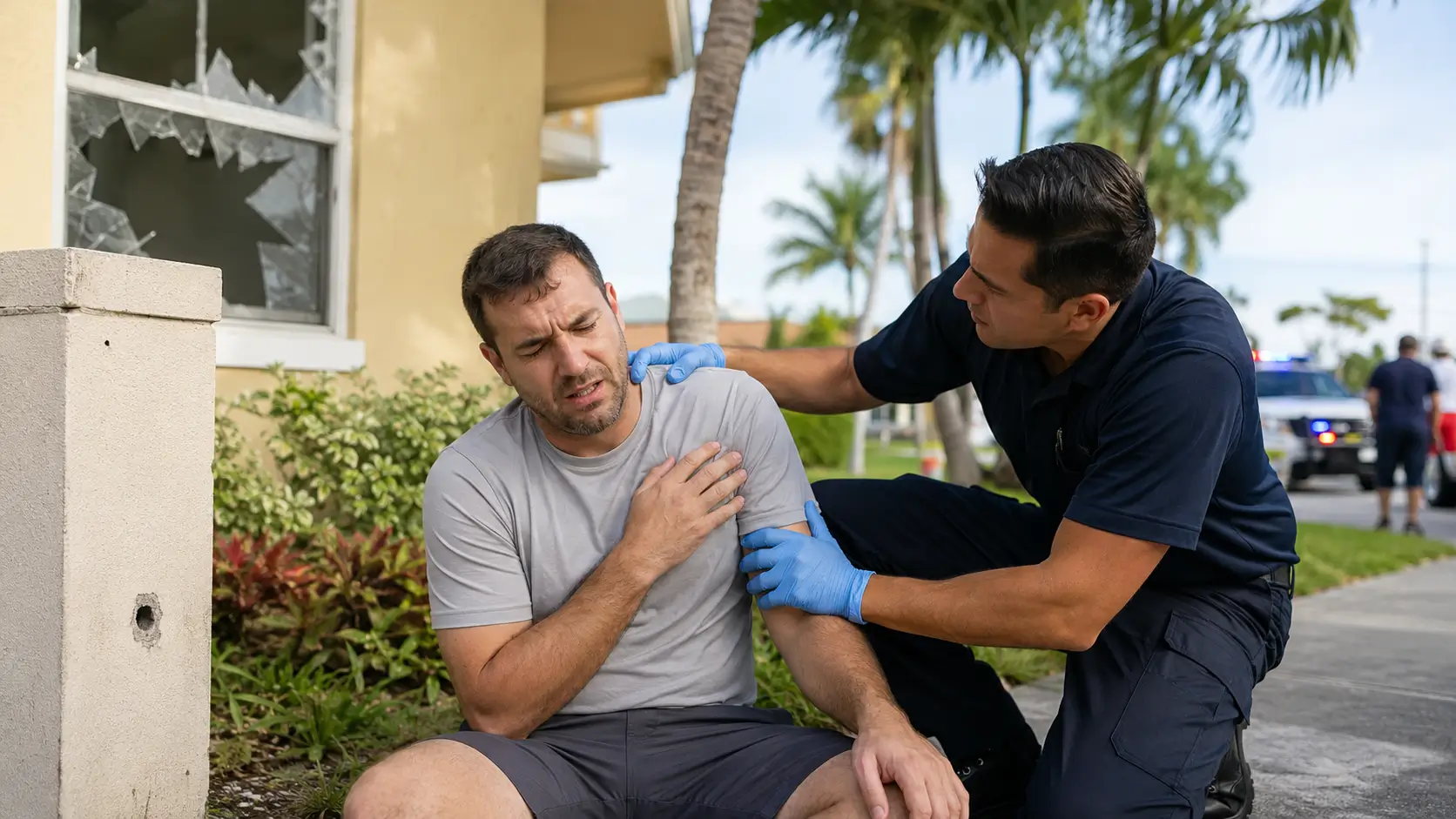

Negligence is one of the most common legal foundations behind personal injury claims, but it is also one of the easiest concepts to misunderstand. In everyday conversation, people often use “negligence” as a synonym for carelessness. In a legal setting, it is more specific. The central question is whether a person or entity failed to use reasonable care under the circumstances, and whether that failure caused harm that can be shown with evidence. Florida’s standard civil jury instructions explain negligence through the idea of reasonable care, meaning the care a reasonably careful person would use in similar circumstances.
That definition matters because it shapes how a case is evaluated from the beginning. In real claims, the focus tends to come back to the same practical themes: what a person should have done, what they actually did, whether that conduct caused the injury in a meaningful way, and what losses can be proven. If you want a clear breakdown of how negligence is evaluated in Florida, our guide walks through the core elements without legal overload.
Accidents rarely arrive in neat, textbook form. Evidence can be incomplete, people remember events differently, and the other side may describe what happened as unavoidable. Some situations also involve relationships that shift responsibility, such as a driver working at the time of a crash, a company controlling safety on a property, or a contractor doing work connected to a larger business. Understanding the major “types of negligence” can help you recognize how responsibility may be argued and why insurers often push certain defenses early.
At the Law Office of John P. Sherman, PLLC, negligence is treated as a practical framework built around duty, breach, causation, and damages, because that structure is what turns an injury into a claim that can address medical care, lost income, and the lasting impact an accident can have on daily life. If you want to sanity check whether your situation actually fits that framework, starting with the elements is usually the fastest way to cut through the noise.
What Are the 4 Types of Negligence?
When people refer to “the four types of negligence,” they are usually talking about broad categories that affect how fault is analyzed and how compensation may be impacted. The underlying idea stays consistent: someone failed to act with reasonable care, and that failure caused harm. What changes from one category to another is the lens used to interpret the facts and the defenses the other side may use to reduce responsibility.
These categories can overlap. A crash might involve a driver who was working at the time, raising questions about an employer’s involvement, while the driving behavior itself may look unusually reckless, raising questions about whether the conduct crossed into a more extreme level of wrongdoing. A slip and fall in a business setting might involve multiple decisions by multiple people, and the defense may try to shift attention toward what the injured person did or did not do. The purpose of these categories is not to complicate your situation. The purpose is to clarify what issues tend to matter most and what kind of evidence usually drives the outcome.
Vicarious Negligence
Vicarious negligence is the idea that responsibility can sometimes follow a relationship, most commonly an employer and employee relationship. In practical terms, it is the concept that a business may become part of a claim when harm is connected to actions taken by someone working for that business in the course of job-related activity. For an injured person, this can matter because it can change who may be legally accountable and what insurance coverage may be available.
Many people first encounter this concept in vehicle collisions. An employee causes a crash while performing work related tasks, and the employer becomes part of the case because the conduct was tied to work. But the same theme can arise in stores, apartment complexes, offices, job sites, and service calls, where employees are expected to follow safety practices designed to protect customers, visitors, and the public.
Businesses sometimes try to narrow exposure by arguing the person was acting outside job duties. That debate can turn on details that are easy to overlook right after an injury, such as what task was being performed, whether the conduct was connected to work objectives, and what internal policies or instructions existed. When those details are not preserved early, the story can drift toward a version that benefits the defense, especially when key records are controlled by the company.
Vicarious negligence is also a reminder that proving negligence is not only about identifying the person who physically caused the harm. It is about identifying all parties whose responsibilities connect to the risk, the conduct, and the outcome. If your injury seems tied to someone’s job or a business operation, it may be time to zoom out and ask, “Who actually controlled the safety choices here?”
Gross Negligence
Gross negligence is not the same thing as ordinary carelessness. Florida’s punitive damages statute defines gross negligence as conduct so reckless or so lacking in care that it shows a conscious disregard or indifference to the life, safety, or rights of persons exposed to it, and Florida law ties punitive damages to cases involving intentional misconduct or gross negligence under that framework.
Under Florida law, a plaintiff cannot pursue punitive damages in a civil case unless they first show, using evidence already in the record or evidence they can proffer, that there is a reasonable basis for such a claim. Only after making this showing may the plaintiff request permission to amend their complaint to include punitive damages. The procedural rules are intentionally flexible so plaintiffs can seek discovery that may lead to admissible evidence on the issue, but the defendant’s financial information cannot be discovered until the court allows the punitive-damages pleading.
A defendant may face punitive damages only if the fact-finder determines, with clear and convincing evidence, that the defendant engaged in intentional misconduct or gross negligence. Intentional misconduct means the defendant knew their actions were wrongful and likely to cause harm but chose to proceed anyway. Gross negligence refers to conduct so reckless or lacking in care that it reflects a conscious disregard for the safety, rights, or life of others.
Employers or corporations can also be held liable for punitive damages based on an employee’s actions, but only when the employee’s conduct meets the standard above and one of the following is true: the organization actively participated in the wrongful conduct, its leadership knowingly approved or tolerated it, or the organization itself acted with gross negligence that contributed to the harm.
This statutory framework applies to all causes of action arising after the law’s effective date.
In real cases, gross negligence is usually discussed when the facts suggest the risk was obvious and the defendant proceeded anyway. It is not the same thing as an accident with a severe outcome. Serious injuries can happen from ordinary negligence, so the focus is not only how bad the harm was. The focus is the conduct, what the circumstances reveal about the risk, and whether the behavior looks like an extreme departure from basic safety.
From an evidence standpoint, cases that raise gross negligence questions often involve proof showing knowledge and disregard. That can include prior warnings, repeated incidents, ignored safety policies, or internal communications suggesting the danger was known. Those kinds of records can change or disappear quickly, which is why it can help to get your timeline and evidence organized sooner rather than later. If you are not sure what “organized” looks like, start with the basics: what happened, what changed afterward, and what documentation exists.
Contributory Negligence
Contributory negligence is a fault rule that can surprise people because it can bar recovery completely if the injured person is found even slightly negligent. The District of Columbia Courts glossary explains the concept and also notes that many jurisdictions have moved away from this approach in favor of comparative negligence systems.
This matters in a Florida discussion for a practical reason. People often see the term online, and confusion about fault rules can show up in insurance cases conversations. You may hear that if you contributed in any way, your case is over. That can be true in places that still apply contributory negligence, but it is not the framework Florida generally applies to many negligence actions.
Even though Florida does not use contributory negligence in that classic all or nothing way, your conduct can still matter. Fault allocation can reduce the value of a claim, and in some situations, being found primarily responsible can significantly limit recovery. The smartest move is not to assume the harshest rule applies. The smarter move is to confirm which rule actually governs the claim you are dealing with.
Comparative Negligence
Comparative negligence is a fault system that reduces recovery based on each party’s percentage of responsibility rather than eliminating recovery automatically. Florida’s comparative fault statute addresses allocation of fault and includes a threshold rule in many covered negligence actions that can prevent recovery when the injured person is found more than half responsible, while also providing important exceptions for certain medical negligence actions.
In other words:
An “accident” includes not only the incident itself but also any events connected to an alleged defect or resulting injuries, including injuries that were made worse by a defective product. “Economic damages” cover financial losses such as medical bills, funeral expenses, lost income, diminished property value, construction repair costs, and other financial harms that would not have occurred without the injury. A “negligence action” is broadly defined and includes claims based on negligence, strict liability, products liability, malpractice, and breach of warranty, regardless of how the parties label the claim. A “products liability action” includes claims based on defects in a product’s design, manufacture, or assembly and covers situations where a defect allegedly made a claimant’s injuries worse.
In negligence cases, a plaintiff’s own contributory fault reduces the amount of damages they can recover in proportion to their percentage of responsibility. This reduction applies to both economic and noneconomic damages. The statute eliminates joint and several liability, requiring courts to enter judgment against each liable party based solely on that party’s percentage of fault. A defendant who wants to attribute any portion of fault to a nonparty must specifically identify that nonparty and later prove, by a preponderance of the evidence, that the nonparty contributed to the plaintiff’s injuries. In products liability cases involving enhanced injuries, the jury must consider the fault of everyone involved in the accident, not only those responsible for the defective product.
The comparative fault statute does not apply to intentional torts, pollution cases, or any action where joint and several liability is specifically authorized by certain statutes. In medical malpractice cases, even when a teaching hospital is involved, the court must follow the comparative fault rule and assign liability according to each party’s percentage of fault.
Importantly, in most negligence actions, a party who is found to be more than 50 percent responsible for their own injuries cannot recover any damages at all. This 50 percent bar does not apply in medical negligence cases governed by chapter 766.
In practical terms, that means fault percentage is not just an abstract concept. It becomes a central battleground. Insurers often try to shift blame toward the injured person because increasing your share of responsibility reduces what they pay. In closer cases, the fight can become less about what happened and more about persuading a jury that the injured person’s choices were the main driver of the outcome.
This is where early documentation can protect you. Photographs, witness information, incident reports, video, and prompt medical evaluation can help anchor your claim in objective proof, especially when the defense later argues your actions were the true cause of the harm. Florida’s civil jury instructions also discuss legal cause in terms of whether negligence directly produces or substantially contributes to producing the injury and whether the injury would not have occurred without that negligence.
If you are worried you might share some fault, the right approach is rarely to assume the claim is hopeless. The better approach is to evaluate what the evidence supports and how responsibility is realistically likely to be viewed in negotiation or in court. If you want a quick reality check, ask yourself one question: “What proof would still make sense to a stranger reading this case file six months from now?”
How Lawyers Prove Negligence: The Four Legal Elements That Matter Most
Negligence is proven through a structured legal analysis, not by simply stating someone was careless. Most negligence claims revolve around four elements: duty, breach, causation, and damages. The firm’s negligence guide explains this framework in plain terms that translate into real case decisions.
· Duty is the starting point. It asks whether the defendant owed you an obligation to act with reasonable care. Duty often comes from common relationships, such as drivers owing care to others on the road or businesses owing care to customers in a commercial space. It can also arise from circumstances where a party creates a risk and is expected to address it. The point is not that every bad event creates liability. The point is that responsibility exists when a duty exists and is violated.
· Breach is the next step and it is often the most contested part of a case. Breach means the defendant failed to meet the duty of reasonable care. One practical way to think of breach is asking whether the defendant did something a reasonably careful person would not do in similar circumstances, or failed to do something a reasonably careful person would have done.
· Causation is where many claims face aggressive pushback. It is not enough to show the defendant acted unreasonably. You must show that the unreasonable conduct caused your injury in a legally meaningful way. This is why timelines, consistent medical documentation, and credible records often matter, because defendants often argue the harm came from something else, such as a later event or a preexisting condition.
· Damages are the final element and they must be real, documented, and supported. A strong claim typically shows both the financial impact of the injury and the personal impact on daily life, work, and function. If you want to see how those categories are framed in Florida civil cases, the jury instructions discuss both economic and noneconomic harms that can be considered when proven.
When to Speak With a Personal Injury Lawyer If You Suspect Negligence
If you suspect negligence caused your injury, timing matters for two reasons: evidence and deadlines. Evidence can fade quickly, especially when businesses control records or when digital systems overwrite footage. Witness memories fade. Hazards are repaired. Waiting rarely makes these issues easier. It usually makes them harder.
Deadlines matter just as much. Florida’s statute of limitations sets time limits for filing civil actions, and Florida law includes a limitations period that can end a claim regardless of how strong the facts are.
Speaking with a personal injury lawyer early does not mean you are committing to a lawsuit. It means you are getting informed before you make choices that reduce your leverage. Recorded statements, broad releases, and early settlement offers can shape the case narrative in ways that are hard to undo.
If you are sitting with unanswered questions, the best next step is often a short, focused conversation about what evidence matters most and what you should avoid doing before the record is complete. If you would rather read first and decide later, the negligence guide is a good place to start.