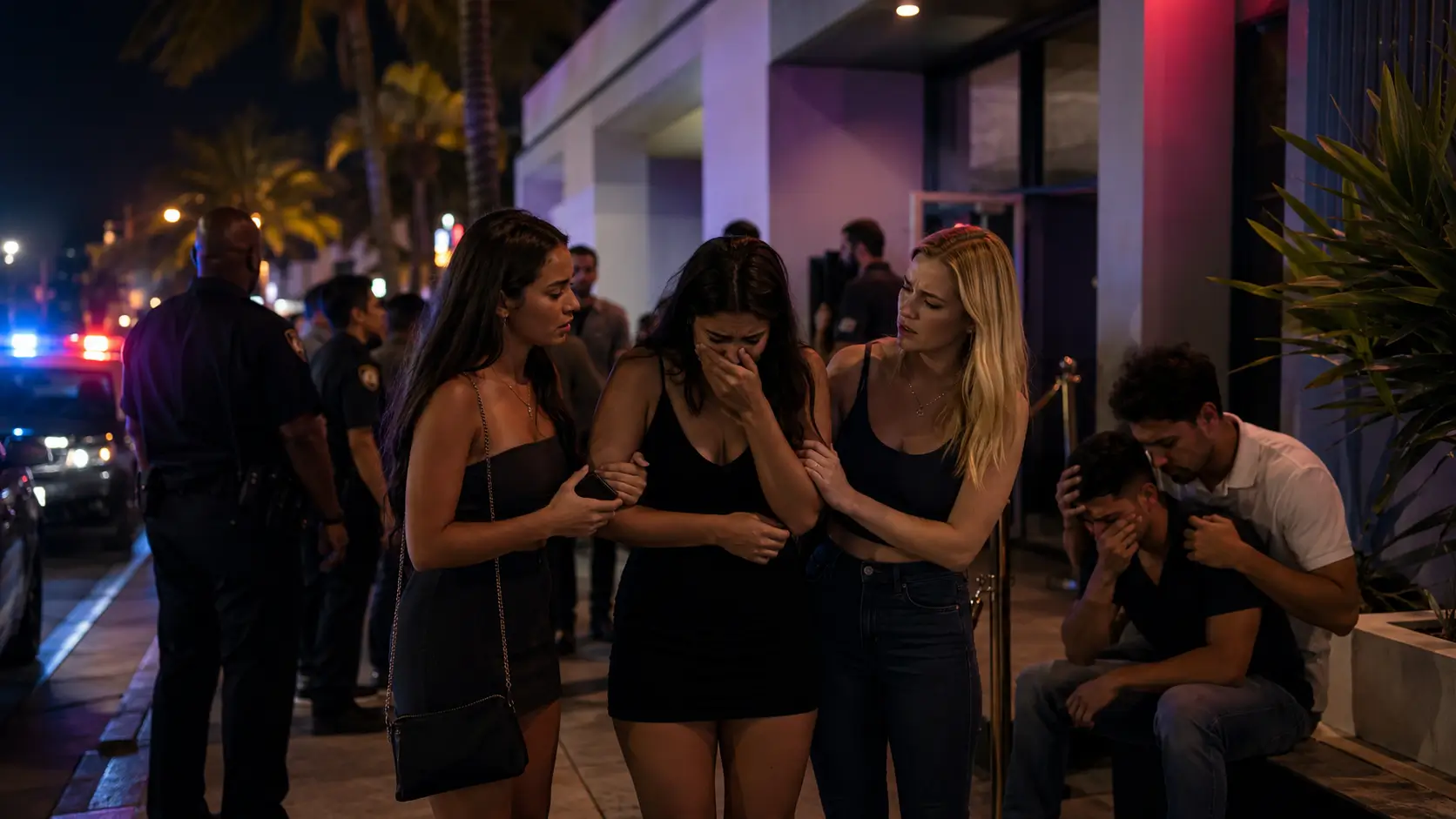
A night out should never end in gunfire. Yet across Florida, nightclub and bar shootings claim lives, shatter families, and leave survivors with injuries that alter the course of everything they had planned. When a shooting occurs at a venue, the instinct is to focus solely on the shooter. However, Florida law recognizes that the person who pulled the trigger is frequently not the only party responsible. Property owners, venue operators, and hired security firms may bear significant legal liability when their failures to implement adequate safety measures created the conditions that allowed violence to occur.
If you or someone you love was shot at a nightclub, bar, lounge, or entertainment venue in Florida, you have legal options that extend far beyond waiting for the criminal justice system to reach a conclusion. A civil negligent security claim can help you recover compensation for medical expenses, lost income, emotional trauma, permanent disability, and more. Understanding your rights is the first and most critical step forward.
What Nightclub and Bar Shooting Victims in Florida Need to Know
- Florida venue owners owe guests a legal duty of reasonable care under premises liability law
- When a shooting occurs at a venue with documented prior violence, the owner may be held civilly liable
- Multiple parties can share responsibility: the venue, security company, event promoter, alcohol vendor, and parking management
- Since 2023, Florida law requires juries to divide fault among everyone who contributed to the injury, including the shooter, which affects how much each defendant ultimately pays
- Criminal charges against the shooter do not prevent a separate and independent civil lawsuit
- Florida’s deadline to file a negligent security claim is 2 years from the date of injury
- Surveillance footage is typically deleted within 24 to 72 hours. Acting immediately is essential
Every nightclub that operates in a high-crime area has a documented history of prior incidents, or serves alcohol to large late-night crowds is legally on notice of the violence risk. That notice creates a legal obligation. When a venue owner chooses revenue over security, hires minimum staff, skips weapon screening, and ignores the prior crime data surrounding the property, that is not carelessness. It is a calculated business decision with foreseeable consequences. Florida law holds that decision accountable. The Law Office of John P. Sherman handles nightclub shooting cases throughout South Florida and offers free, confidential consultations with no obligation.
Why Nightclub Owners Have a Legal Duty to Protect Patrons from Gun Violence
Under Florida law, business owners who invite the public onto their premises owe what is legally known as a duty of reasonable care to their guests. This obligation is especially heightened for nightclubs and bars, which operate in environments where specific risk factors are inherently present: alcohol consumption, large crowds, late-night hours, and in many cases, a documented history of prior violent incidents on or near the property.
Florida’s premises liability framework, rooted in Chapter 768 of the Florida Statutes, establishes that property owners can be held liable when they knew or should have known about a foreseeable risk of harm and failed to take reasonable steps to prevent it. When a shooting occurs at a venue that had prior incidents on record, received repeated noise or disturbance complaints from neighbors or law enforcement, or operated in a high-crime area without meaningful precautions, that pattern of inaction can constitute negligent security under Florida law.
A 2023 change to Florida law is important context for these cases. Under Florida Statutes Section 768.0701, when a negligent security claim against a commercial property owner goes to a jury, the jury must now divide fault among everyone who contributed to the injury, including the person who actually committed the shooting, not just the venue. This does not eliminate a venue’s liability when its security failures are well documented, but it does mean the case has to be built to clearly establish how much of the harm traces back to the venue’s own conduct, which makes early, thorough investigation even more important.
The legal foundation for these claims rests on five interconnected principles:
| Legal Principle | What It Means for Shooting Victims |
| Duty of Care | Venue owners must take reasonable steps to protect guests from foreseeable harm |
| Foreseeability | Prior crimes or documented dangers place owners on legal notice to act |
| Breach of Duty | Failing to implement adequate, reasonable security measures |
| Causation | That failure directly contributed to the shooting and resulting injuries |
| Damages | The victim suffered real, measurable harm as a direct result |
Florida courts have consistently held that a business operator’s awareness of prior criminal activity on or near the premises is a decisive factor in establishing liability. When that awareness existed and no meaningful corrective action was taken, victims have a powerful and well-established foundation for a civil claim. Importantly, the standard is not perfection. It is reasonableness. Courts ask what a reasonable venue operator would have done given the same knowledge and circumstances, and when the answer reveals a clear gap between what was done and what should have been done, liability follows.
The duty of care also extends to areas adjacent to the venue itself. Parking lots, sidewalk entrances, outdoor patios, and even the immediate surrounding public areas can fall within the scope of a venue’s security obligation when the operator exercises control over those spaces or when violence in those areas was reasonably foreseeable.
Security Failures That Make Venues Liable: Metal Detectors, Pat-Downs, Guards, and Cameras
Not every nightclub shooting automatically creates civil liability for the venue. The central question courts examine is whether the venue acted reasonably given what it knew or should have known about the specific risks at that location. When the answer is no, specific and identifiable security failures become the building blocks of a strong negligent security claim.
Common security failures that Florida courts have found sufficient to support liability include the following:
- Failure to implement weapon screening protocols High-capacity entertainment venues, particularly those with a documented history of altercations, prior weapons charges, or known gang activity in the area, may be expected to use metal detectors, wand screenings, or pat-downs at entry points. When a venue with that risk profile skips weapon screening entirely, that omission carries significant legal weight.
- Inadequate or undertrained security personnel Hiring the minimum number of guards to satisfy a contractual requirement, positioning them where they cannot effectively monitor crowd dynamics, or failing to train staff to recognize and de-escalate brewing conflicts can all constitute a breach of the duty of care. Security personnel who are poorly matched to the size and nature of the venue they are protecting represent a well-documented point of failure in nightclub shooting litigation.
- Malfunctioning or absent surveillance systems Functioning camera systems serve both as a deterrent to violence and as a response and investigation tool when incidents occur. Venues that operate without working surveillance in areas known to carry elevated risk, or that allow cameras to fall into disrepair without repair, may face serious scrutiny in civil litigation. Courts have pointed to camera footage gaps as evidence of systemic negligence.
- Failure to enforce occupancy and capacity limits Overcrowded venues create conditions where violence can escalate rapidly and where security personnel become overwhelmed and unable to respond effectively. When a venue knowingly exceeds its permitted fire code occupancy to maximize revenue, that decision can independently contribute to civil liability if chaos during a violent incident is worsened by overcrowding.
- Inadequate lighting in parking lots and entry areas A substantial number of nightclub-related shootings do not occur inside the venue itself but in adjacent parking lots, at drop-off zones, or near entry and exit points. Poor lighting in these areas, combined with the absence of roving security personnel, is one of the most frequently cited elements in negligent security claims involving entertainment venues. A dark parking lot after a late-night closing is a foreseeable danger, not an unpredictable one.
- Failure to act on visible early warning signs If security staff observed a confrontation escalating inside the venue and chose not to intervene, or if management knowingly allowed visibly intoxicated, agitated, or threatening individuals to remain on the premises rather than removing them, those documented failures can serve as direct and powerful evidence of negligence. Inaction in the face of an obvious threat is itself a form of misconduct under Florida premises liability law.
- Absence of written security policies or trained response protocols Venues that cannot produce written security procedures, training records, incident logs, or post-event reports often struggle to defend themselves in civil litigation. The absence of documentation suggests the absence of a coherent security system, which courts and juries often interpret as a structural failure rather than a one-time oversight.
Proving Foreseeability: When a Venue’s History of Violence Creates Liability
Foreseeability is the cornerstone of negligent security law in Florida. A property owner cannot be held liable for a genuinely random and entirely unforeseeable act of violence. However, when a venue’s own documented history, or the verified history of the surrounding geographic area, clearly signals an elevated risk of gun violence, the legal landscape shifts fundamentally in the victim’s favor.
The more foreseeable the danger, the stronger the legal obligation to address it. And the stronger that obligation, the more damaging its breach becomes when violence occurs.
Evidence routinely used to establish foreseeability in Florida nightclub shooting cases includes:
- Police incident reports from the venue address or nearby locations, documenting prior fights, weapons possession, drug activity, or disturbance responses
- 911 call records and CAD logs showing a pattern of emergency responses to the specific property over a defined period
- Prior civil lawsuits filed against the same venue or property owner arising from security-related incidents
- Crime statistics compiled by the Florida Department of Law Enforcement (FDLE) for the surrounding neighborhood or zip code
- Public records and local news archives documenting previous shootings, stabbings, or armed assaults at the property
- Internal communications between venue management and security contractors acknowledging risk concerns or past incidents
- Liquor license disciplinary records maintained by the Florida Division of Alcoholic Beverages and Tobacco, which may document prior incidents tied to the venue’s operating history
- Insurance claim histories showing prior payouts related to violence on the property
A skilled legal team will pursue all of these evidentiary avenues simultaneously. In many cases, the most damaging evidence is information the venue itself possesses but has not disclosed. Preservation demands and discovery tools available in civil litigation can compel the release of internal records that definitively establish what the venue knew, when it knew it, and what it chose not to do in response.
The critical insight for victims is straightforward: the more thoroughly documented the history of violence at or near a venue, the stronger the argument that the operator was on legal notice and bore a corresponding obligation to act. When meaningful action never came and a shooting occurred as a foreseeable result, the path to civil liability is both clear and compelling.
Related reading:
Negligent Security Lawyer Near Me
Accidental Shooting Claims in Florida: Civil Liability for Negligent Gun Discharge
Negligent Security
Nightclub Shooting Litigation in Florida: What the Case History Shows
Florida has been the site of some of the most consequential nightclub violence in modern American history, and the litigation that followed has shaped how courts and lawyers think about negligent security in entertainment venues, even when the outcomes were not uniformly favorable to victims.
The Pulse nightclub shooting in Orlando in 2016 is the clearest example of both the promise and the limits of civil litigation in this area. Survivors and victims’ families pursued multiple legal theories, including claims against the City of Orlando and its police department over the tactical response, and separate negligent security claims against the nightclub’s owners. The civil rights claims against the city and police were dismissed by a federal court in 2018, and that dismissal was upheld on appeal. Pulse is a useful illustration of an important legal principle that holds true regardless of any single case’s outcome: victims of nightclub violence have an independent legal right to pursue civil remedies separate from the criminal prosecution of the shooter. But it is also a reminder that a mass-casualty attack with no real precedent at that specific location raises much harder foreseeability questions than the more common fact pattern this article focuses on, a venue with a documented history of prior violence that management knew about and failed to address. That second scenario, not a unique act of mass violence, is the stronger and far more typical basis for a negligent security claim.
Beyond that case, Florida courts have repeatedly addressed nightclub and bar shooting cases involving a wide range of circumstances:
- Venues in Miami-Dade, Broward, and Palm Beach counties where multiple documented disturbance calls and prior weapon incidents preceded a fatal shooting, with courts finding that the operator was on clear notice
- Outdoor concert and festival venues where perimeter security was so inadequate that armed individuals were able to enter without any screening
- Sports bars and neighborhood taverns that served visibly intoxicated patrons for extended periods before those individuals became involved in armed altercations in the establishment’s parking lot
- Venues where surveillance cameras were known to be non-functional but had not been repaired or replaced, leaving critical blind spots in areas where violence eventually occurred
These cases have produced jury verdicts and negotiated settlements that compensated victims for emergency medical expenses, surgical costs, long-term rehabilitation, permanent physical disability, psychological harm, and the loss of future earning potential. They have also sent an unmistakable message to venue operators across the state: the financial, legal, and reputational consequences of inadequate security vastly outweigh the cost of implementing it.
Damages Available in Nightclub and Bar Shooting Cases
Survivors of nightclub and bar shootings frequently face consequences that extend far beyond the night of the incident. Gunshot wounds often require emergency surgery, extended hospitalization, and months or years of rehabilitation. The psychological toll, including post-traumatic stress disorder, depression, anxiety disorders, and sleep disruption, can be equally debilitating and equally compensable under Florida law.
Florida allows victims of negligent security to seek compensation across a broad and well-defined range of damage categories.
Economic Damages, directly measurable financial losses:
| Category | Examples |
| Emergency medical expenses | Trauma surgery, ICU care, emergency room treatment |
| Ongoing and future medical costs | Physical therapy, psychiatric care, prosthetics, follow-up surgeries |
| Lost wages | Income lost during the recovery period |
| Loss of earning capacity | Diminished ability to work due to permanent physical or cognitive disability |
| Out-of-pocket costs | Home modifications, medical equipment, transportation to treatment |
Non-Economic Damages, losses that carry no fixed dollar value but are equally real and equally compensable:
- Physical pain and suffering, both acute and chronic
- Emotional distress and psychological trauma, including clinically diagnosed PTSD
- Loss of enjoyment of life and the inability to participate in activities previously valued
- Permanent disfigurement or scarring from gunshot wounds
- Loss of consortium, meaning a spouse’s claim for the documented loss of the victim’s companionship and support, and in narrower circumstances a parent’s claim tied to a child’s permanent disability
In cases where a venue’s conduct was particularly reckless, demonstrated a pattern of deliberate indifference to known dangers, or showed a conscious disregard for the safety of paying patrons, Florida courts may also award punitive damages. These are not intended to compensate the victim for specific losses but rather to punish egregious conduct and deter similar behavior by other operators in the future. Punitive damages require clear and convincing evidence of intentional misconduct or gross negligence under Florida Statutes Section 768.72, and they are not unlimited. Florida Statutes Section 768.73 generally caps punitive damages at the greater of three times compensatory damages or $500,000, rising to four times compensatory damages or $2 million when the conduct was motivated solely by unreasonable financial gain, and removing the cap entirely only where the defendant acted with a specific intent to harm. Within those limits, punitive damages in well-documented negligent security cases can still substantially increase the total recovery available to a victim.
The ultimate value of a nightclub shooting claim depends on the severity and permanence of the injuries sustained, the depth and clarity of the evidence establishing the venue’s negligence, and the quality of the legal representation pursuing the claim on the victim’s behalf.
The full financial value of a nightclub shooting claim depends heavily on how many parties are pursued and how thoroughly each one’s negligence is documented. Venues, security contractors, promoters, and alcohol vendors often carry separate insurance policies, and each one represents an independent source of compensation. Victims who move quickly with experienced legal representation consistently recover more than those who act alone or wait, because the evidence is stronger and every liable party is identified before they have time to distance themselves from the incident. Do not let the venue’s insurance team be the only ones who know the full picture of what your case is worth.
Third-Party Liability: Security Companies, Event Promoters, and Alcohol Vendors
One of the most strategically important elements of nightclub shooting litigation is the comprehensive identification of every party whose negligence contributed to the harm. In a substantial number of cases, liability extends well beyond the venue owner alone, and failing to pursue all available defendants can leave significant compensation on the table.
- Private Security Companies
When a nightclub or bar hires an outside firm to provide security personnel, that firm may be independently liable for failures in staff training, shift coverage, supervisory oversight, or on-the-ground response to developing threats. Florida courts have held security contractors independently responsible when their employees failed to prevent foreseeable violence that adequate training and deployment would have addressed. The contract between the venue and the security firm, along with the firm’s internal training records and incident protocols, is often central evidence in this line of liability.
- Event Promoters
Large-scale events held at nightclubs and entertainment venues are frequently organized by independent third-party promoters who exercise significant control over ticketing volume, crowd management decisions, and the hiring of event-specific staff. When a promoter’s choices, such as deliberately overselling capacity, failing to coordinate security protocols with the venue operator, or bringing in inexperienced staff to cut costs, contributed to a violent incident, that promoter may share in civil liability proportional to their role in creating the dangerous conditions.
- Alcohol Vendors and Dram Shop Liability
Florida Statute Section 768.125, commonly referenced as Florida’s Dram Shop provision, addresses civil liability for vendors who serve alcohol. Florida’s approach to dram shop liability is more limited than in some other states, but liability can attach when a vendor knowingly serves a person who is habitually addicted to alcohol and that person subsequently causes harm to a third party. Critically, knowingly and unlawfully serving alcohol to a minor who then causes or contributes to a shooting can create substantial independent civil liability for the vendor and the venue. The records of what was served, to whom, and for how long are discoverable and often decisive.
- Parking Lot and Property Management Companies
When a shooting occurs in a parking area managed by a third-party property management company rather than the venue itself, that entity may face independent claims for inadequate lighting, the absence of security patrols, failure to maintain surveillance equipment, or a documented failure to address known safety hazards despite prior incidents in the same area.
Identifying and pursuing the full scope of liable parties requires a thorough, professionally conducted investigation from the earliest possible moment. Every additional defendant identified represents an additional source of potential compensation for the victim.
How to Build a Strong Negligent Security Case After a Nightclub Shooting
A successful negligent security claim is built on evidence, and that evidence must be gathered quickly. Florida’s statute of limitations for personal injury claims, including claims arising from negligent security, is generally two years from the date of the incident under Florida Statute Section 95.11, as amended by recent legislative changes. Acting without delay is not merely advisable. It is legally essential to preserve your right to pursue compensation.
Surveillance footage is routinely overwritten within days. Security logs are purged on rolling schedules. Witness memories fade. The venues and their insurers begin building their defense the moment an incident occurs. Victims who move quickly have a measurable advantage over those who wait.
Steps that materially strengthen a nightclub shooting claim:
- Seek immediate medical attention: your health is the absolute priority, and the medical records generated by your treatment also serve as foundational evidence connecting your documented injuries to the specific incident at the venue.
- Report the incident to law enforcement: a police report creates an official, timestamped record of what happened, where it occurred, and what conditions were observed. Obtain a copy as soon as it becomes available through the relevant agency.
- Document the scene if you are able: photographs and videos of the venue entrance, visible security presence or absence, lighting conditions, surveillance camera placement, and the surrounding area can be invaluable in reconstructing the conditions that allowed the shooting to occur.
- Identify and preserve witness information: names and reliable contact information for other patrons, bystanders, or venue employees who witnessed the incident itself or the pre-incident conditions can prove decisive in establishing what happened and what warning signs were present.
- Preserve all records and correspondence: retain every medical bill, insurance communication, pay stub documenting lost wages, and any written or digital correspondence involving the venue, its insurance carrier, or its legal representatives.
- Avoid discussing the case on social media: anything posted publicly about the incident, your injuries, or your activities during recovery can be located and used by defense attorneys to dispute the severity of your claim or undermine your credibility with a jury.
- Consult a personal injury attorney as early as possible: an attorney can immediately send legal preservation letters to the venue, its security contractor, and any relevant third parties, formally requiring them to retain surveillance footage, security staffing logs, incident reports, and other critical records before those materials are erased, overwritten, or destroyed through routine operations.
The legal process in nightclub shooting cases is genuinely complex. These cases typically involve multiple defendants represented by separate legal teams, multiple insurance carriers with competing interests, expert witnesses in security standards and medical damages, and often contentious, extended litigation before resolution. Having experienced legal counsel engaged from the very first day creates a structural advantage that influences every phase of the case.
Victims are strongly encouraged to consult with a qualified personal injury attorney before giving any recorded statements to insurance representatives, before signing any documents offered by the venue or its agents, and before accepting any preliminary settlement offers that may dramatically undervalue the full scope of their losses.
Final Thoughts
When a nightclub or bar shooting occurs in Florida, the person who fired the weapon bears obvious and immediate criminal responsibility. However, that criminal accountability does not eliminate the parallel civil liability of property owners, contracted security firms, event organizers, alcohol vendors, and other parties whose negligence created or allowed the conditions for tragedy. Florida law gives victims a meaningful, enforceable path to civil justice, and that path deserves to be pursued with full force and without delay.
The physical, emotional, and financial toll of a shooting injury is profound. Emergency surgeries, long-term rehabilitation, lost income, permanent disability, and the deep psychological wounds of surviving a violent attack can persist for years or for a lifetime. You should not be left to absorb those costs alone because someone else failed to take basic, reasonable precautions to protect the people they invited through their doors.
The strength of a nightclub shooting case is often built on records the victim never knew existed: prior incident reports the venue never made public, security contractor communications acknowledging understaffing, liquor license disciplinary history, and 911 call logs that establish a pattern of violence the owner had been notified about for months or years. Call JP Sherman Law today for a free, confidential case evaluation. What an investigation uncovers in these cases is almost always more powerful than what a victim walks in knowing.